

Holguín: Second Trilateral Meeting In Cyprus Set For Late January
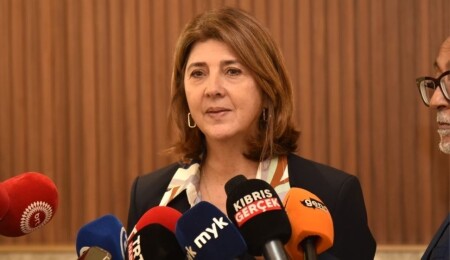
UN Secretary-General’s Special Envoy for Cyprus María Ángela Holguín Cuellar has said that a second trilateral meeting in Cyprus, planned for the end of January, could pave the way for an informal “five plus one” format meeting involving Türkiye, Greece and the United Kingdom.
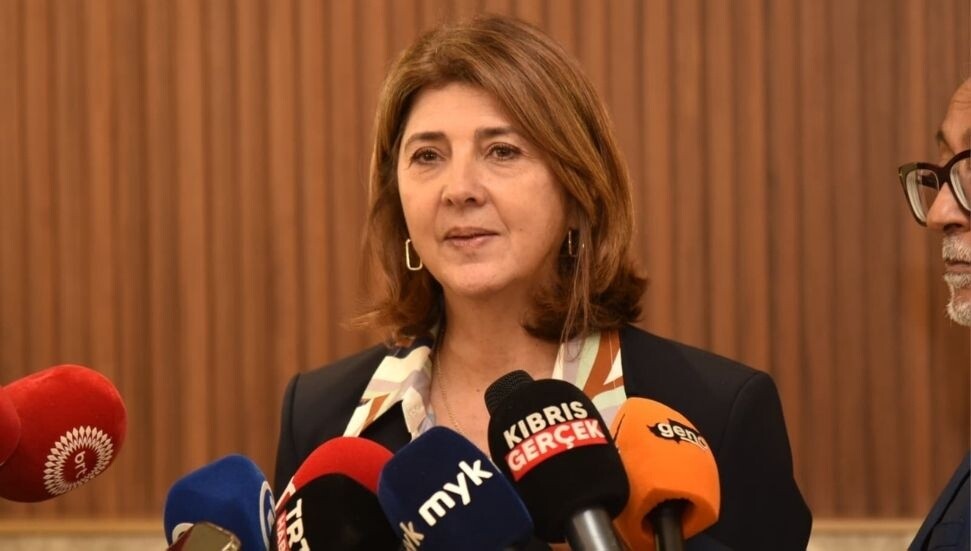
Speaking to ANKA News Agency’s Yusuf Kanlı, Holguín said the January trilateral meeting would be treated as a preparatory step to assess whether sufficient progress has been made to justify convening a broader informal conference under UN auspices.
Holguín confirmed that her scheduled meeting in Ankara with Turkish Foreign Minister Hakan Fidan had been postponed to Thursday due to the minister’s heavy schedule, stressing that the talks would be of critical importance. She is expected to present a positive assessment to UN Secretary-General António Guterres with a recommendation to convene an informal five plus one meeting, bringing together the two Cypriot sides, the three guarantor countries — Türkiye, Greece and the United Kingdom — and the United Nations.
According to sources familiar with the process, a trilateral meeting between the two leaders is likely to take place toward the end of January, followed in February by an informal expanded meeting in the five plus one format, should conditions allow.
Holguín said January would be treated as a decisive preparation period, during which negotiating teams on both sides would be expected to resolve technical and procedural issues before the leaders meet again. She noted that recent contacts with President Tufan Erhürman in Nicosia, Greek Cypriot leader Nikos Christodoulidis, and Greek Prime Minister Kyriakos Mitsotakis in Athens had revealed both opportunities and weaknesses in the current process.
While political discussions have been more substantive than in previous rounds, Holguín said insufficient technical preparation had led to excessive time being spent on details. During the last trilateral meeting, more than three hours were devoted to issues such as water infrastructure projects, renewable energy proposals and crossing points. She stressed that while these issues are vital to daily life for both communities, they should be prepared for implementation in advance so that leaders can focus on political dialogue.
“When leaders are forced to debate technical details, the purpose of political dialogue is undermined,” Holguín said, underlining the need to strengthen negotiators’ meetings and ensure proposals brought to the table are clear and workable.
Despite these shortcomings, she said the meeting was significant in substance, noting that Erhürman and Christodoulidis had engaged in in-depth exchanges on key milestones of the Cyprus talks, including the 2017 Crans-Montana process, the Berlin framework and previous convergences. This, she said, demonstrated a shift from symbolic contacts to a more informed and focused engagement.
The aim of the late-January trilateral meeting will be to assess whether there is sufficient progress on confidence-building measures and a meaningful convergence on methodology to justify convening a broader UN-led format. If these conditions are met, Holguín is expected to recommend to the Secretary-General that an informal five plus one meeting be held.
Although such a meeting would not be unprecedented, it would mark the most serious escalation in diplomatic engagement in years and signal that the UN sees a realistic prospect for progress.
Holguín emphasised that the immediate objective is not a comprehensive settlement but agreement on a structured framework for meaningful negotiations. Sources indicate that three key elements would need to be secured for the process to advance: acceptance of political equality as defined by UN Security Council resolutions and past convergences, including recognition of previous agreements such as rotating presidency; agreement on a time-bound and results-oriented process; and confirmation of past convergences achieved in earlier negotiations.
Sources also said that the Turkish Cypriot demand for assurances against a return to the status quo — sometimes referred to as a “penalty clause” — should be addressed at the level of the UN Secretary-General, with the European Union potentially playing a supportive role.
Holguín warned that failure to agree on a structured framework could once again lead to protracted procedural disputes and the collapse of talks, as seen in the past.
She also rejected claims frequently voiced in Greek Cypriot political discourse that Turkish Cypriot positions are dictated by Ankara, including allegations that Erhürman left the meeting room twice during the November trilateral talks to consult Türkiye. Describing such claims as speculation, Holguín said they did not contribute to the process, while stressing the importance of the constructive involvement of all directly concerned parties and the European Union.
Whether the diplomatic timetable advances will depend in the coming weeks on whether negotiating teams can produce tangible outcomes to narrow differences before leaders meet again. Holguín said the weeks ahead would be a critical test of whether the Cyprus talks can move from preparation to purpose.
Source: ANKA News Agency
Comments
Attention!
Sending all kinds of financial, legal, criminal, administrative responsibility content arising from illegal, threatening, disturbing, insulting and abusive, humiliating, humiliating, vulgar, obscene, immoral, damaging personal rights or similar content. It belongs to the Member / Members.