

Christodoulides: Joining Nato ‘would be a natural development’ for Cyprus
Joining Nato “would be a natural development” for Cyprus, President Nikos Christodoulides said on Tuesday.
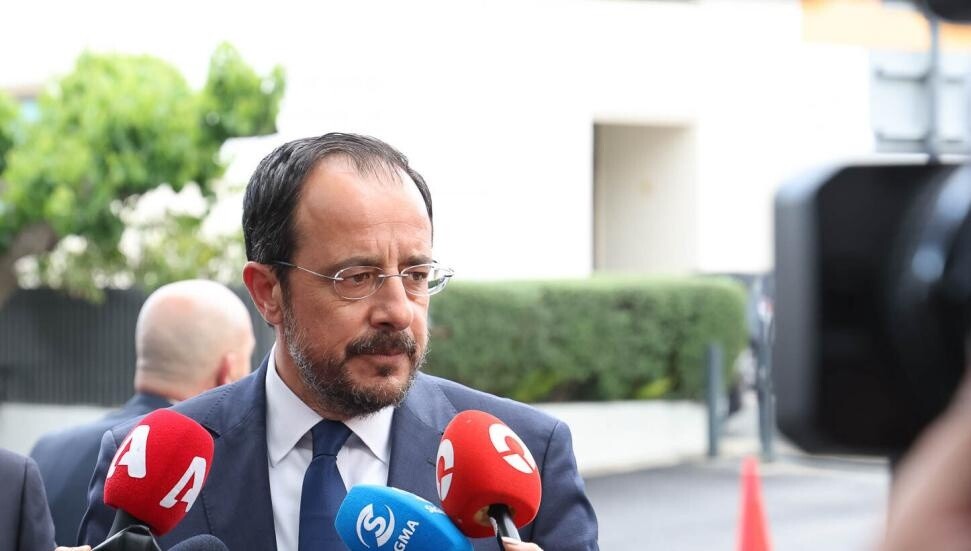
Speaking to French newspaper Le Figaro, he said that “if it were possible for Cyprus to apply tomorrow and receive a positive response from all member states, we would do so”, but acknowledged that with the Cyprus problem remaining unresolved, Turkey would veto a Cypriot application to join Nato at present.
“For this reason, we are working methodically to strengthen our military to bring it up to the level of other Nato members, while we wait for the political conditions to be met for us to join the organisation,” he said.
He added that Cyprus “already has a clearly defined foreign policy, with a strong orientation towards the west”.
The question of whether Cyprus may join Nato was raised last year after Christodoulides met then United States President Joe Biden at the White House, with Greek newspaper Kathimerini at the time reporting that Christodoulides had presented a plan for Cyprus’ future accession to Nato at that meeting.
After his visit to the White House, Christodoulides said that Cyprus is getting ready to join Nato if and when Turkey withdraws its objections.
However, shortly afterwards, the Turkish defence ministry was quoted as saying that Cypriot Nato membership would be “unacceptable” and that “such an attempt would disrupt the delicate balance on the Cyprus problem and negatively affect the process of working towards a solution”.
Later, Foreign Minister Constantinos Kombos that public debate over whether Cyprus should join Nato is “premature”, adding that the government is “working to increase our compatibility with Nato member states, and Nato members include Greece and France – countries with which there is a traditional cooperation”.
Away from the question of whether Cyprus will join Nato, the island has been undertaking a westward shift in its defence policy, having been authorised by the US at the beginning of the year to buy military hardware directly from the country’s government after joining three programmes run by its department of defence.
The country was incorporated into the US defence security cooperation agency’s foreign military sales (FMS) programme, its excess defence articles (EDA) programme and will be allocated resources under the US’ ‘Title 10’ security assistance provisions.
The country was incorporated into the US defence security cooperation agency’s foreign military sales (FMS) programme, its excess defence articles (EDA) programme and will be allocated resources under the US’ ‘Title 10’ security assistance provisions.
It is the inclusion into the FMS programme which will allow the government to purchase military hardware directly from the US government, with the country previously having only been able to buy US military hardware from private companies.
Being able to circumvent private companies will allow the government to buy weapons and other hardware at cheaper prices than before, given that the US government typically acquires its apparatus in bulk and is thus able to sell it on for cheaper prices than what private companies would offer to a military of the National Guard’s size.
In the Autumn, the National Guard took delivery of the Israeli Barak MX air defence system – a surface-to-air missile which is designed to defend against airborne threats including aircraft, helicopters, anti-ship missiles, drones, ballistic missiles, cruise missiles, and combat jets – cementing the island’s place in the US’ defence ecosystem.
However, this delivery drew the ire of the Turkish government, with sources from the country’s defence ministry having warned of “dangerous consequences”.
“We would like to reiterate that the Greek Cypriot administration’s ongoing armament efforts and activities which could undermine peace and stability on the island could have dangerous consequences,” the sources said.
They added that “any attempt to disrupt the balance on the island is being carefully monitored”, and that “all necessary measures are being taken to ensure the security and peace of the TRNC”.
“Turkey, as it did yesterday, stands by and supports the TRNC today. The Turkish Cypriot people are also under Turkey’s protection,” they said.
Source: Cyprus Mail
Comments
Attention!
Sending all kinds of financial, legal, criminal, administrative responsibility content arising from illegal, threatening, disturbing, insulting and abusive, humiliating, humiliating, vulgar, obscene, immoral, damaging personal rights or similar content. It belongs to the Member / Members.